Get a home energy plan built around your bill.
Solar first, battery when it pencils, EV charging when the home is ready. Send the basics and we will model the sequence for your roof.
How it works
Your home energy plan should answer one question first.
Is solar worth it for this roof, this bill, and this utility rate? Everything else comes after that.
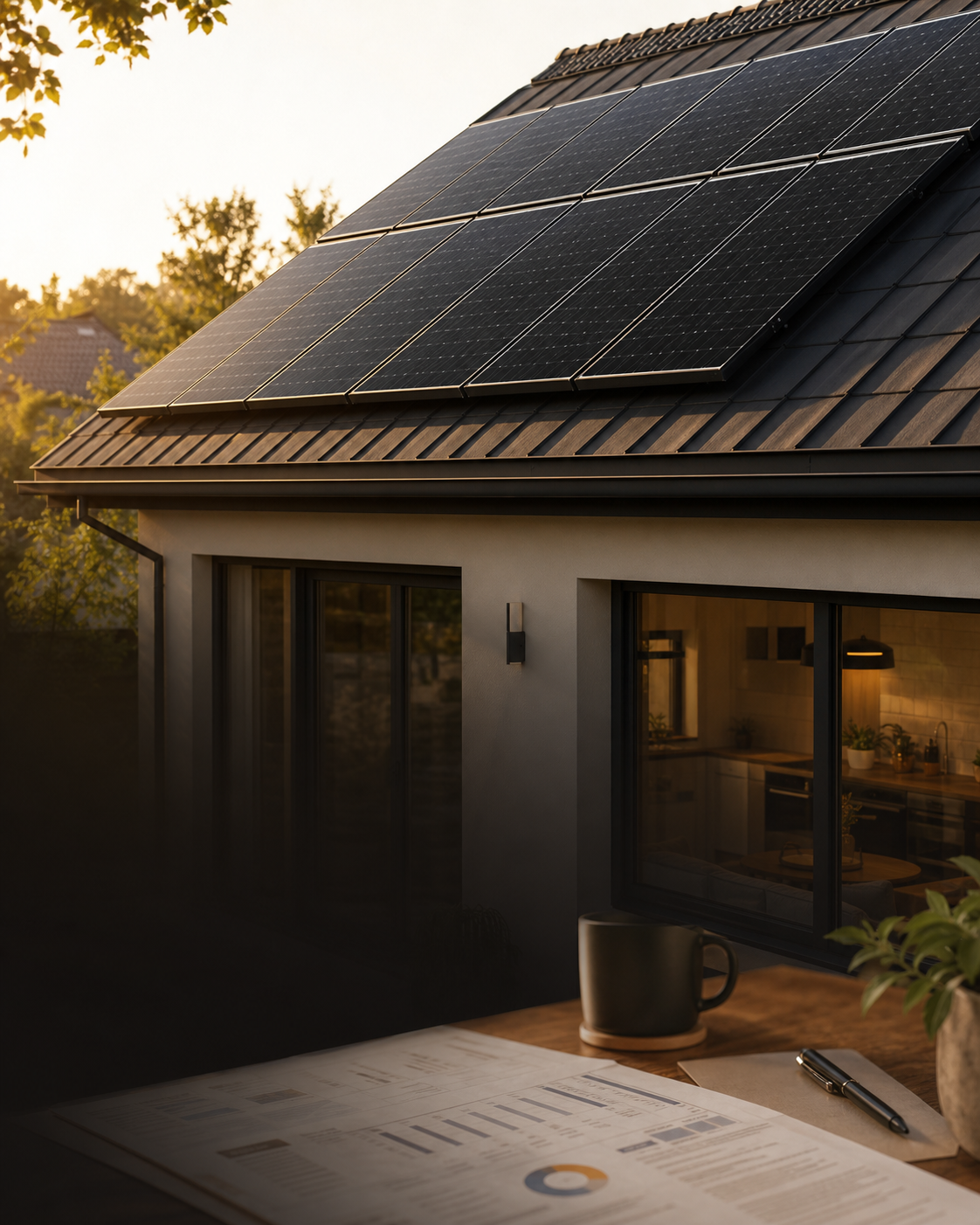
01 / roof model
We find out if the roof can actually carry the savings.
We start with the address, utility bill, roof planes, shade, and local rate structure. The goal is to size the system around the home, not around a sales target.
This gives you a production estimate, a year-one bill range, and a clear answer on whether the no-money-down PPA is worth comparing.
02 / battery fit
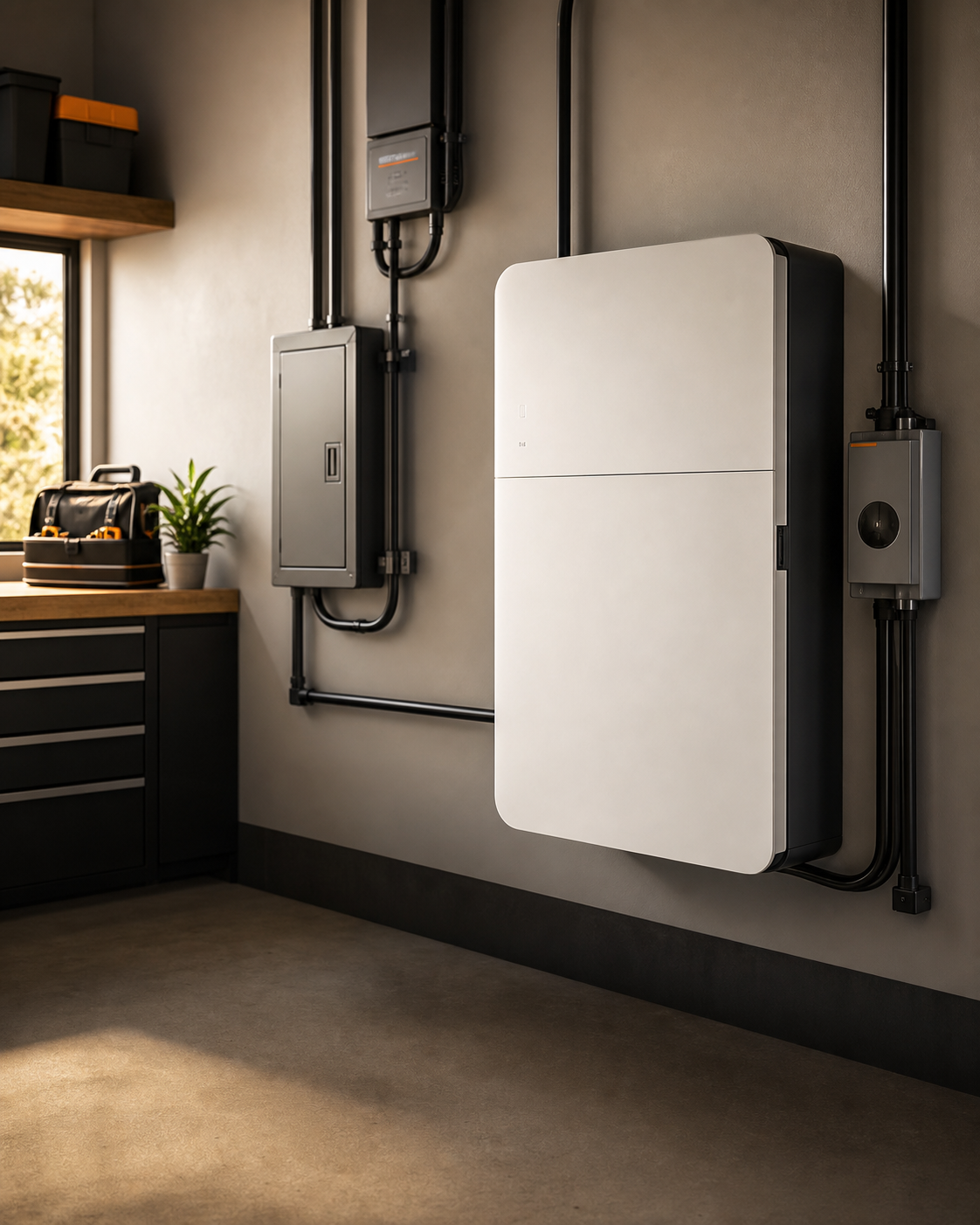
We only add backup when it earns its place.
A battery can protect the home during outages and help you use more of your own solar. It can also add cost fast.
We show what it backs up, how long it should last, and whether the savings or resilience case supports adding it now.
03 / EV path
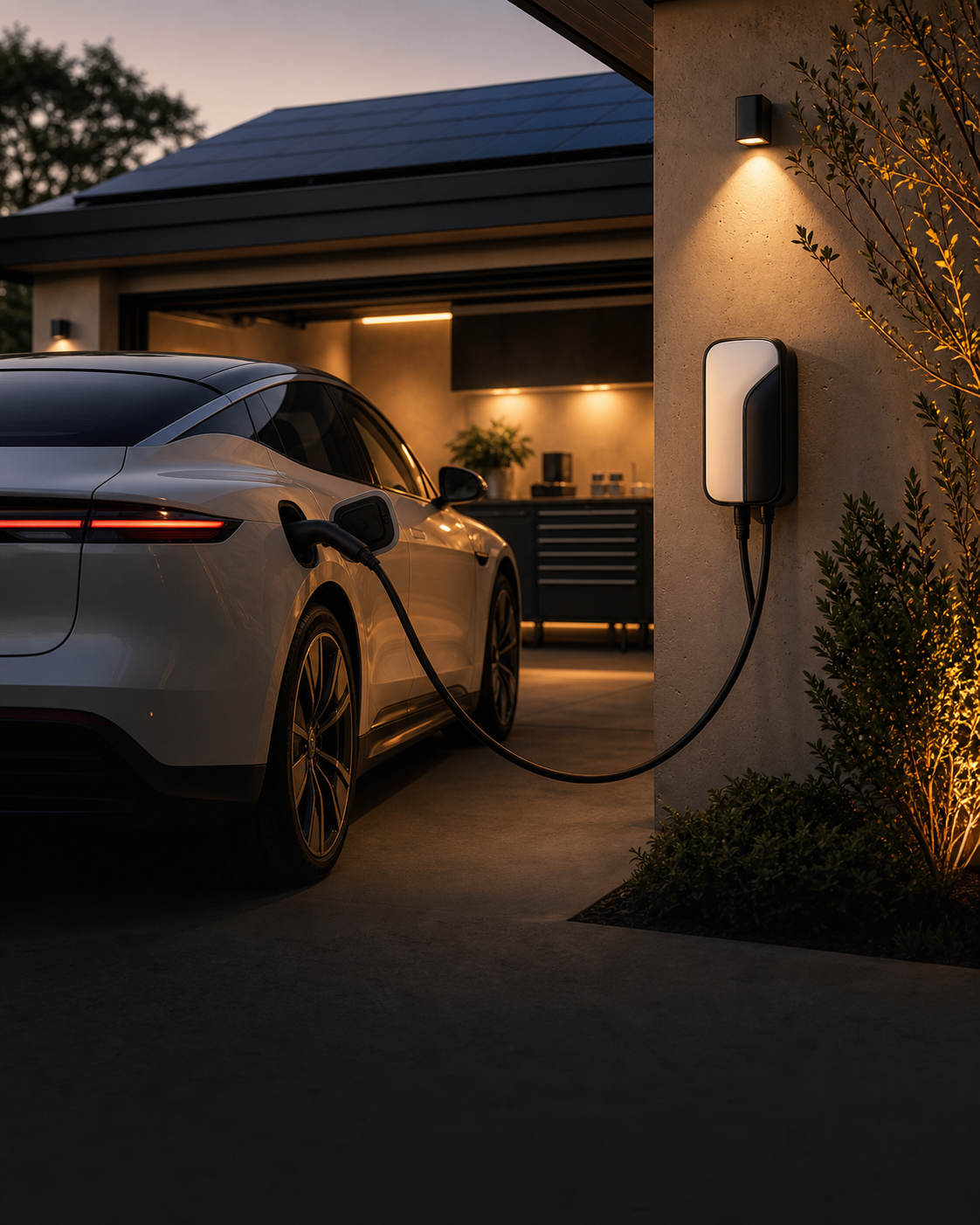
We plan the charger around the home you are building toward.
EV charging changes the home's electrical load. If you drive electric now, we price the charger into the plan.
If an EV is a later move, we flag the wiring, panel, and production choices that make the future install cleaner.
04 / decision
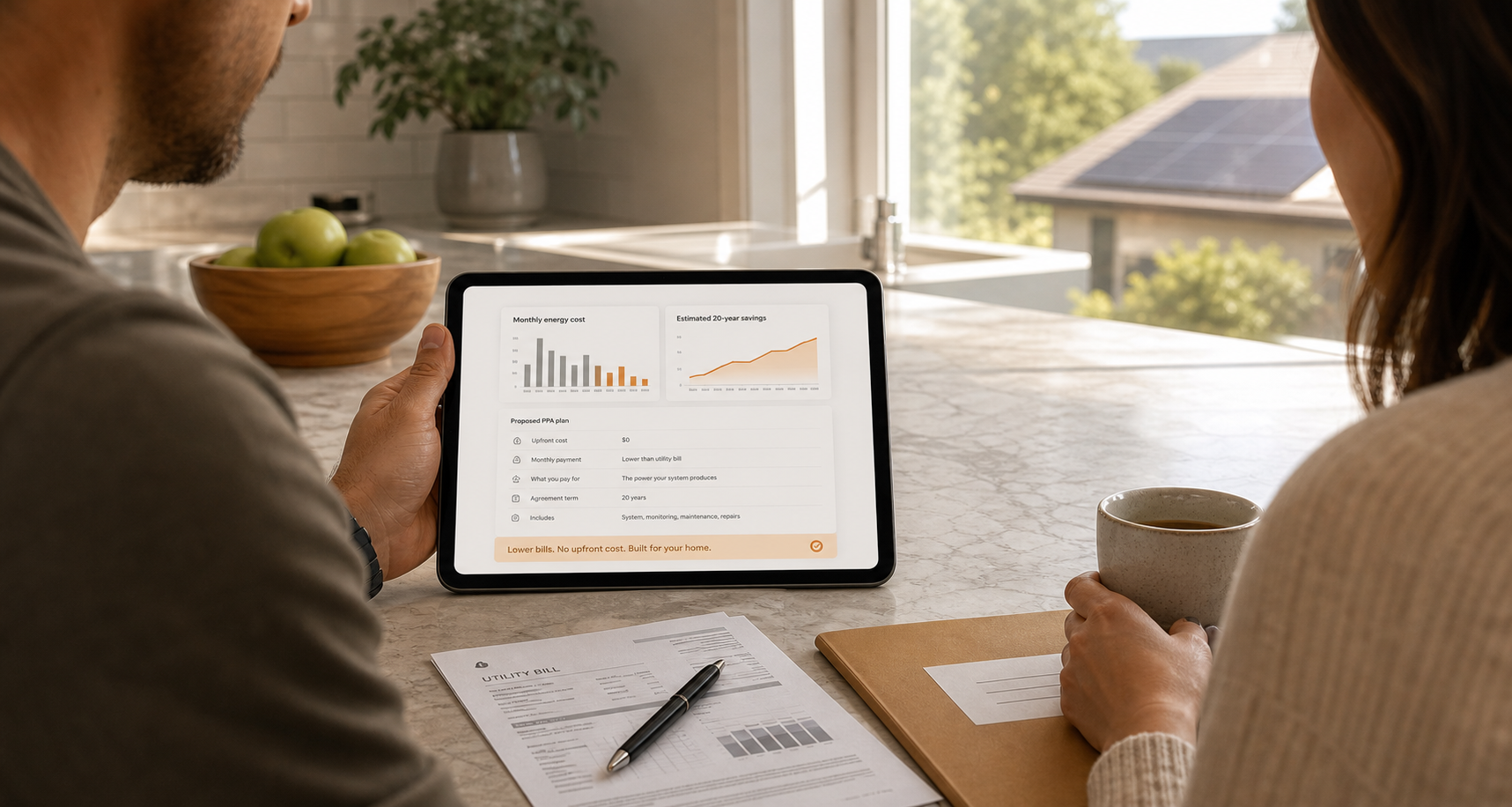
You get a proposal you can compare, not a bundled mystery package.
The final plan separates what saves money now, what improves backup, and what prepares the home for an EV.
If the PPA does not beat your utility or the roof is a poor fit, we say that before you spend anything.
Next step
Send the basics. We will run the model.
Your address and average bill are enough to start. We come back with the roof-specific solar case first, then the battery and EV path only where it makes sense.
Get a roof number
Get the numbers for your roof.
Send your address and average electric bill. We will model the roof, price the no-money-down PPA, and show the locked rate before you commit to anything.